Montego Bay: A Paint-Brushed Script Font for Modern Branding
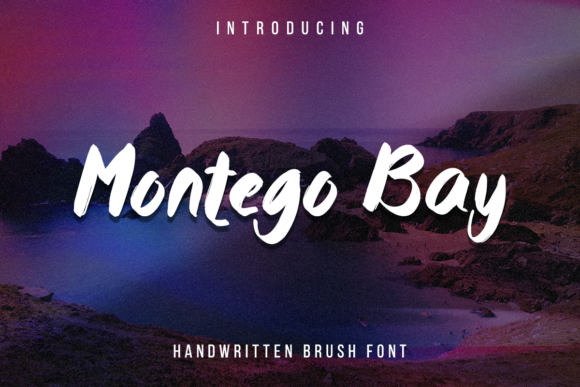
Opening a fresh brand board one afternoon, I was in search of something soft yet bold—a typeface that could carry the warmth of a boutique café while still feeling contemporary. That’s when I landed on Montego Bay, a paint-brushed script font from Script Amp. It wasn’t just the look that caught my eye; it was the way the strokes felt like they were hand-painted, giving it an organic charm that stood out from the usual digital scripts.
A Friendly Script with a Modern Edge
Montego Bay has a visual rhythm that feels both approachable and refined. The brushstrokes are clean but not too rigid, offering a balance between handwritten authenticity and polished design. This makes it a versatile choice for branding that wants to feel personal without sacrificing professionalism. The font carries a mood that’s warm and inviting, perfect for projects that aim to connect emotionally with their audience.
When I first tested it on a logo concept for a local bakery, I noticed how well it paired with a minimalist sans serif for body text. The contrast helped maintain readability while keeping the brand’s identity playful and modern. It worked especially well on packaging mockups, where the script added a touch of elegance to product labels and tags.
Real-World Applications and Design Considerations
I used Montego Bay across several branding elements—logo drafts, social media layouts, business cards, and even a website header. In each case, it performed admirably as a display font. On a shop sign, it didn’t feel overwhelming, and on a printed card, the texture of the brushstrokes translated beautifully into physical form.
However, it’s important to note that Montego Bay isn’t ideal for long-form text. When I tried using it for a flyer with more than a few lines of body copy, the legibility dropped significantly. It shines best in short phrases, headlines, or accents within a larger typography system.
For a wedding invitation design, I layered Montego Bay with a serif font for the address and details. The result felt balanced and elegant, proving that it can work well in editorial design when paired correctly. Similarly, for a creative studio’s website, I placed it on the hero section alongside a modern sans serif, which gave the page a dynamic yet cohesive look.
Font Pairing and Practical Tips
When pairing Montego Bay with other fonts, I found that a clean sans serif like Helvetica Neue or a classic serif like Garamond provided excellent contrast. For a more casual vibe, a handwritten font like Quicksand complemented it nicely in a stationery set.
One thing to consider is the file formats available. Montego Bay comes in OTF and TTF, which are standard for most design software. Webfont availability is also a plus if you’re planning to use it on a website or digital asset. Just be sure to check the licensing before using it in client work—especially for print-on-demand products or commercial templates.
I always recommend testing any font in real conditions before finalizing a project. Try placing it on a mockup of your intended application, whether it’s a packaging label, a social media post, or a poster. See how it behaves at different sizes and distances. Montego Bay looks great at larger scales but might lose its character when scaled down too much.
Who Should Use Montego Bay?
This font is ideal for creatives working on branding that leans into warmth, personality, and a touch of whimsy. Think boutique shops, handmade brands, wedding planners, or lifestyle-focused businesses. It’s not suited for formal corporate settings or anything requiring dense body text, but it excels in logos, invitations, signage, and decorative elements.
If you're looking for a script font that feels modern without being overly ornate, Montego Bay is worth considering. Its paint-brushed aesthetic brings a sense of artistry to any design, making it a valuable addition to your font library for branding that needs to stand out with a human touch.